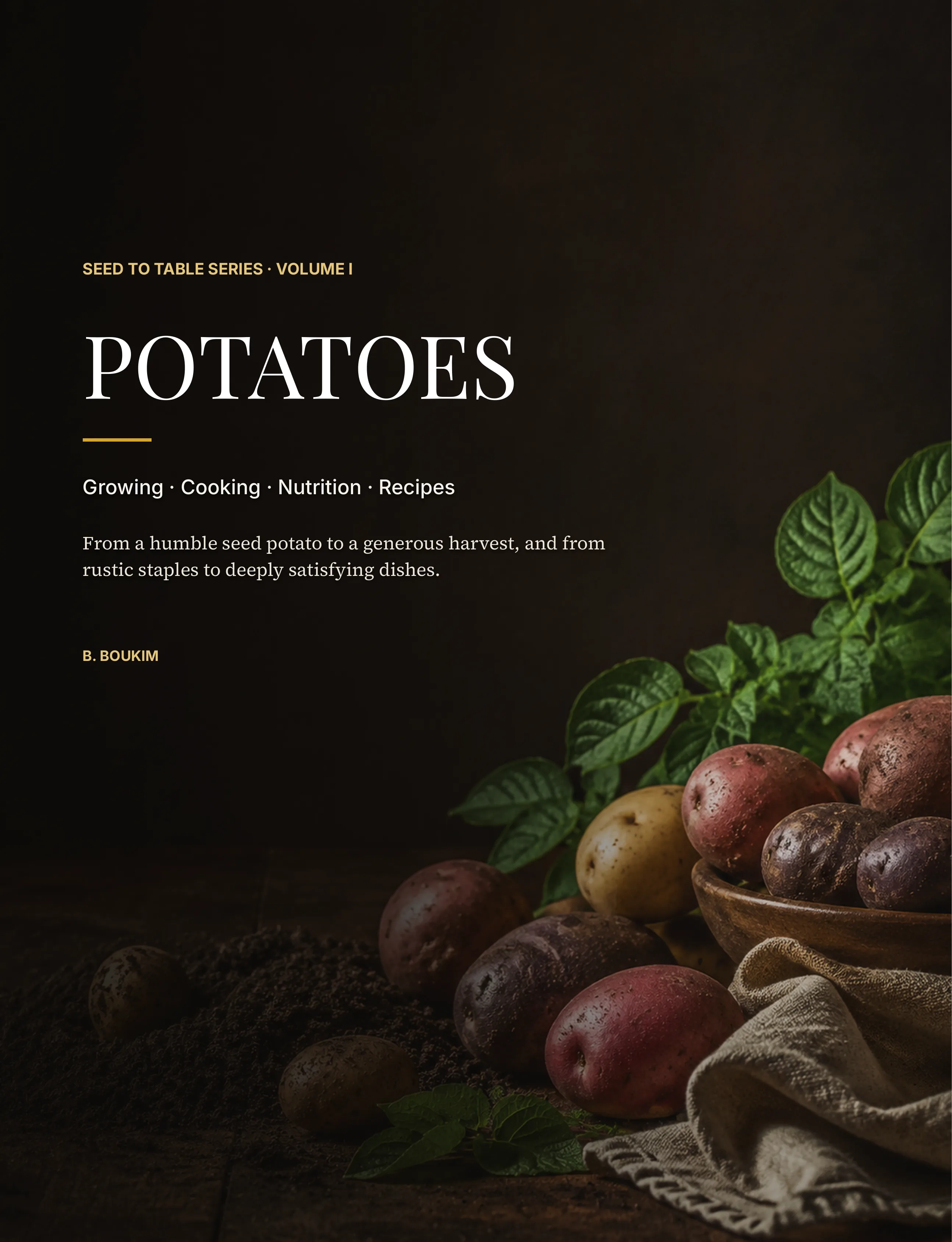
Understanding the difference between waxy vs floury potatoes is one of the most useful skills a home cook can learn. Waxy potatoes contain less starch, retain their shape during cooking, and suit salads, soups, boiling, steaming, and gratins. Floury or starchy potatoes become fluffy and break down more easily, making them the better choice for baking, mashing, roasting, and fries. In between sit all-purpose potatoes, which balance firmness and fluffiness and can step into either role when you are unsure.
Waxy or Floury Potatoes for Roasting?
Both types can be roasted. Choose floury potatoes for a fluffy middle and a rough, crisp crust; choose waxy potatoes when you prefer firmer, creamy pieces that stay intact. All-purpose yellow potatoes offer a useful balance. The best choice depends on the texture you want, rather than one type being suitable for every roast.
| Desired result | Potato type | What to expect |
|---|---|---|
| Fluffy center with crisp, rough edges | Floury, such as Russet | Handle gently after parboiling because the edges can crumble. |
| Creamy, firm pieces that hold their shape | Waxy, such as red potatoes or fingerlings | Good for skin-on halves and roasted vegetable trays. |
| A balance of crisp edges and creamy flesh | All-purpose yellow potatoes | A flexible choice for everyday roasting. |
Waxy vs Floury Potatoes at a Glance
| Type | Texture | Cooking behavior | Best uses | Examples |
|---|---|---|---|---|
| Waxy | Firm and creamy | Holds its shape | Boiling, steaming, salads, soups, stews and gratins | Charlotte, many red potatoes and fingerlings |
| Floury/starchy | Dry and fluffy | Breaks down more easily | Baking, mashing, fries and crisp roasting | Russet Burbank, King Edward and Maris Piper |
| All-purpose | Balanced starch and moisture | Holds together while becoming tender | Roasting, mashing, soups and general cooking | Yukon Gold and similar yellow varieties |
This table gives a quick overview, but the real key is understanding why these differences exist and how to use them to your advantage in the kitchen.
What Makes a Potato Waxy or Floury?
Every potato contains starch and moisture in varying proportions. Floury potatoes have a higher starch content and lower moisture, which causes their cells to separate and expand during cooking. That separation is what creates the dry, fluffy texture ideal for mashed potatoes and crispy fries. Waxy potatoes have less starch and more moisture, so their cells hold together through cooking. That structure is what keeps potato salad intact and soup chunks from dissolving.
Starch type also plays a role. The ratio of amylose to amylopectin differs between varieties, and that ratio influences both texture and cooking performance. Floury potatoes generally contain more amylose, which contributes to the fluffy, mealy texture. Waxy potatoes contain more amylopectin, which helps them stay firm and creamy. All-purpose potatoes fall between the two, with a balance that lets them perform reasonably well across many cooking methods.
Growing conditions, harvest time, and storage can also affect texture. A potato harvested young tends to be waxier, while the same variety left in the ground longer may develop a somewhat flourier character. This is why appearance alone is not always a reliable guide, and why understanding the general categories matters more than memorizing individual variety names.
Waxy Potatoes: Characteristics and Best Uses
Waxy potatoes are the shape-holders of the potato world. Their firm, creamy texture means they stay intact through boiling and steaming, which makes them the natural choice for potato salad, soups, stews, and gratins where you want distinct pieces rather than a broken-down mass.
For potato salad, waxy potatoes are the best choice. They hold their shape after cooking, slice cleanly without crumbling, and absorb dressing without turning mushy. For soups and stews, they maintain their structure through long simmering, adding substance without dissolving into the broth. For gratins, their moisture content helps them cook evenly in a creamy sauce without collapsing.
Boiling and steaming are where waxy potatoes shine most. Because they retain their texture, they emerge tender but intact, ready for a simple butter-and-herb dressing or a cold potato salad. Varieties such as Charlotte, many red potatoes, and most fingerlings fall into this category.
It is worth noting that the term new potato usually describes an early harvest stage rather than one specific variety. New potatoes are typically young, waxy, and moist, which is why they behave so well in salads and boiling preparations. But the label refers to when the potato was dug, not to a particular cultivar.
Floury Potatoes: Characteristics and Best Uses
Floury potatoes are the fluffy ones. Their higher starch content and lower moisture cause them to break down and become light and mealy when cooked, which is exactly what you want for mashed potatoes, baked potatoes, fries, and roasted potatoes with crisp edges and fluffy centers.
For mashed potatoes, floury potatoes are the best choice. They break down easily, absorb butter and milk willingly, and produce a light, fluffy mash rather than a dense, wet one. For baked potatoes, their dry texture creates the fluffy interior that is the whole point of a baked spud. For fries, their starch content helps achieve a crisp exterior and soft interior when fried properly.
For roasted potatoes, floury varieties produce the best contrast between crisp outside and fluffy inside. Their surface roughs up easily when parboiled, which helps fat cling and create the golden, crunchy crust that makes roast potatoes so satisfying. Varieties such as Russet Burbank, King Edward, and Maris Piper are classic floury choices.
All-Purpose Potatoes: The Flexible Middle Ground
All-purpose potatoes sit between waxy and floury on the starch spectrum. Yukon Gold and similar yellow varieties are the most familiar examples. They balance enough structure to hold together in soups and gratins with enough fluffiness to produce a good mash or a respectable roast.
This flexibility makes all-purpose potatoes invaluable when you are not certain which type a recipe calls for, or when you want to stock a single bag that can handle most tasks. They will not produce the absolute lightest mash or the absolute firmest salad, but they perform well across a wide range of dishes and are a reliable default for everyday cooking.
The Best Potato Type for Every Cooking Method
| Dish | Best potato type |
|---|---|
| Mashed potatoes | Floury or all-purpose |
| French fries | Floury/starchy |
| Baked potatoes | Floury/starchy |
| Potato salad | Waxy |
| Soups and stews | Waxy or all-purpose |
| Gratins | Waxy or all-purpose |
| Crisp roast potatoes | Floury or all-purpose |
| Boiled potatoes | Waxy |
These pairings reflect how each potato type behaves under heat, but personal preference and locally available varieties can affect the final choice. Some cooks prefer the firmer bite of a waxy potato in a roast, while others want maximum fluff. Use this table as a starting point and adjust based on what you find at the store and what you enjoy eating.
How to Choose Potatoes at the Store
Choosing the right potato starts with reading labels and asking shop staff when possible. Many supermarkets and greengrocers label potatoes as baking, mashing, boiling, or salad, which maps roughly onto floury, all-purpose, and waxy categories. When labels are present, they are the most reliable guide.
Visual cues can help but are not always conclusive. Waxy potatoes often have thinner skins, smoother surfaces, and a slightly glossy appearance. Floury potatoes tend to have thicker, rougher skins and a more matte finish. However, appearance alone is not always a reliable indicator, since some varieties do not follow the visual pattern you might expect.
When in doubt, choose all-purpose yellow potatoes such as Yukon Gold. They will perform adequately across most cooking methods and reduce the risk of a mismatched choice. And remember that sweet potatoes, despite the name, are a different crop entirely and not a potato variety.